
Table of Contents
ToggleIntroduction
A dangerous monster hero can be thrilling, but danger alone does not make readers care. It can create tension, yes. It can make the first meeting sharp and memorable. But sympathy comes from what the reader sees underneath the danger.
The monster hero does not need to become harmless. In fact, he usually should not. The goal is to help readers understand why he is feared, what he refuses to become, and why the heroine slowly begins to see him differently from everyone else.
Show the Danger Clearly, But Give It Boundaries
A dangerous monster hero should feel capable of real force. If the story tells us he is feared by villages, hunters, kings, or old gods, the reader needs to believe that reputation has weight.
But danger without boundaries becomes exhausting. Readers need to know what he will do, what he will not do, and where his moral line sits.
Let Him Be Dangerous for a Reason
A monster hero becomes easier to understand when his danger has context. Maybe he guards a cursed pass because something worse lives beyond it. Maybe he frightened humans away for years because they kept trying to steal from a sacred place. Maybe his violence is tied to survival, duty, or a terrible past, not casual cruelty.
That does not excuse every mistake he has made. It simply gives the reader a place to begin.
A dangerous hero with no reason can feel flat. A dangerous hero with a reason gives the story texture. Readers can think, “I do not approve of everything he has done, but I understand how he became this way.” That tiny shift matters.
Give Him a Line He Will Not Cross
A strong moral boundary is one of the best ways to create sympathy. The monster may be feared, but he should have a line that tells the reader who he really is.
Maybe he never harms children. Maybe he refuses to attack anyone who has surrendered. Maybe he will tear apart a war band, but steps carefully around a wounded animal. Maybe he is terrifying to enemies, but never uses fear against the heroine once he realizes she is afraid.
That boundary gives readers something to hold onto.
It also gives the heroine something to notice. The village may call him a beast, but she sees the pattern. His danger is not random. His restraint is not weakness. He chooses where his power goes.
Use Restraint as the First Sign of Goodness
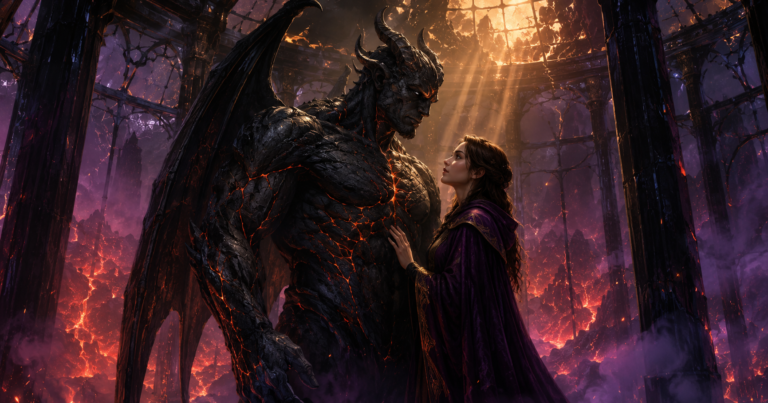
Restraint is powerful in monster romance because the hero often has more strength than everyone else in the scene. He may tower over the heroine. He may have claws, horns, fangs, wings, shadow magic, or a reputation that makes grown men avoid his road after sunset.
So when he holds back, the reader notices.
Let Him Stop Before He Has To
A dangerous monster hero becomes sympathetic when he stops himself before someone else forces him to stop. That moment tells us he is not ruled completely by instinct, anger, or old pain.
Maybe he steps toward the heroine, sees fear in her face, and stops with visible effort. Maybe he lowers his hand even though the person in front of him deserves his rage. Maybe his voice goes quiet when it could have become a command.
The pause matters.
That pause tells the reader there is a person inside the monster, even if that person is rough, wounded, or unused to gentleness. He is not safe because he has no power. He is safe because he can choose what to do with it.
Make His Control Cost Him Something
Restraint feels more meaningful when it is difficult. If holding back is effortless, the scene loses some of its force.
Let the reader feel the struggle. His claws dig into his own palm. His wings flare, then fold. His breath turns sharp in the cold air. The shadows around him rise, then settle because he forces them down.
This is not about making him dramatic for no reason. It is about showing that goodness is not always easy for him.
A dangerous monster hero may have spent years being feared, hunted, or treated like a weapon. Choosing restraint may go against habit, instinct, or training. When he chooses it anyway, sympathy grows.
Give Him Private Vulnerability
Sympathy often begins in private moments. The world sees the monster’s strength. The reader needs glimpses of what that strength has cost him.
This does not mean turning him into a wounded puppy. A monster hero can remain imposing, guarded, and strange while still carrying pain, loneliness, shame, or grief.
Show What He Hides From Others
A dangerous hero usually has something he hides. It may be a wound, a memory, a fear, a ritual, or a softness he believes would make him weaker.
Maybe he visits the graves of people he failed to save. Maybe he repairs the village wall at night, then lets everyone believe the old stones fixed themselves. Maybe he keeps trophies from enemies, but also keeps one small ribbon from the child who once thanked him.
These details create sympathy because they show a hidden life.
The heroine does not need to discover everything at once. In fact, it is often better if she finds pieces slowly. A locked room. A careful habit. A name he will not say. Each discovery should make the reader revise what they thought they knew.
Let His Loneliness Feel Chosen and Unchosen
Loneliness works well for dangerous monster heroes because fear often isolates them. But his loneliness should not be simple.
Part of it may be forced on him. People run. Doors close. Stories grow worse with every retelling. He becomes easier to hate because no one has to look him in the eye.
But part of it may also be chosen.
He stays away because he believes distance keeps others safe. He lives beyond the ridge because trouble follows him. He refuses kindness because hope has punished him before. That mix makes him more interesting than a hero who only sits sadly in a tower waiting to be loved.
The heroine’s presence then becomes dangerous in a new way. Not because she threatens his body, but because she threatens the walls he has built around his heart.
Let the Heroine See the Truth in Pieces
The heroine is often the reader’s guide into sympathy. If she changes how she sees him too quickly, the romance may feel unearned.
Let her learn him slowly. Let each scene add a new piece of evidence until her understanding becomes stronger than the rumors.
Start With What Everyone Else Sees
At first, the heroine may see what everyone sees. The dangerous body. The frightening silence. The old blood on the legend. The way people lower their voices when his name is spoken.
That is fine.
A good heroine does not need to be instantly certain that everyone else is wrong. She can be cautious. She can be suspicious. She can believe some of the stories and still notice when something does not fit.
Maybe the villagers say he is cruel, but she sees him leave medicine on a doorstep. Maybe the hunters say he has no mercy, but he lets a terrified boy run. Maybe everyone says he loves violence, but after a fight, he looks sick with himself.
Those contradictions are the beginning of sympathy.
Give Her Evidence, Not Just Feelings
The heroine should not trust him only because she feels drawn to him. Attraction is useful, but evidence builds belief.
Let her see what he does when no one is praising him. Let her hear the truth from someone he once saved. Let her watch him choose the harder, kinder action when the easier one would protect his pride.
That evidence helps the reader trust the romance too.
The heroine is not being foolish. She is paying attention. She is gathering the truth piece by piece, until the monster everyone warned her about becomes someone far more complicated.
Use Protective Devotion Carefully
Protective devotion is a beautiful tool for a dangerous monster hero. It lets his strength become romantic rather than frightening.
The key is making protection feel like care, not control. He can guard, defend, and sacrifice, but the heroine’s voice still needs to matter.
Let Him Protect Without Owning
A dangerous monster hero may instinctively want to stand between the heroine and everything that could harm her. That can be deeply romantic when handled with care.
But he should not treat her like property.
Let him protect her choices too. He shields her body from danger, but also respects her decisions. He may hate letting her walk into a risky scene, but if she has a reason to go, he helps her prepare instead of simply forbidding it.
That is where devotion becomes attractive.
He does not only say, “I will keep you safe.” He learns what safety means to her. Sometimes it means shelter. Sometimes it means truth. Sometimes it means being trusted to stand on her own feet.
Make Sacrifice Reveal His Heart
A dangerous hero often earns sympathy through sacrifice. Not a grand, hollow sacrifice, but a choice that exposes what he values.
Maybe he takes blame for something he did not do because revealing the truth would endanger others. Maybe he lets the heroine leave because he believes her freedom matters more than his longing. Maybe he risks becoming the thing everyone fears in order to protect people who will never thank him.
Sacrifice reveals character quickly.
It tells the reader that beneath the danger is devotion. Not neat devotion. Not easy devotion. But something real enough to cost him.
Let Him Change Without Becoming Ordinary
A dangerous monster hero should grow, but he does not need to become gentle in every situation. Growth should make him more emotionally open, not less interesting.
The goal is not to turn the wolf into a house dog. The goal is to show that the wolf can choose who he guards, who he trusts, and what kind of creature he wants to be.
Give Him Emotional Growth, Not a Personality Replacement
A common mistake is making the dangerous hero lose all his edge once love enters the story. Suddenly he smiles easily, speaks politely, and becomes unrecognizable.
That can feel false.
Let love change him in specific ways. He tells the truth sooner. He pauses before assuming rejection. He lets the heroine see his scars. He asks instead of commands. He still has the same deep voice, strange habits, frightening reputation, and old instincts, but now he is learning what trust requires.
That is enough.
Readers do not need him softened into someone else. They need to see that love gives him a better choice.
Let the Final Choice Prove Who He Is
Near the end of the story, give the dangerous monster hero a choice that shows his growth clearly. It should test his power, his restraint, and his devotion all at once.
Maybe he can destroy his enemies, but doing so would make him the monster they claim he is. Maybe he can keep the heroine safe by lying, but he chooses honesty. Maybe he can accept exile alone, but she stands beside him, and he finally allows himself to be chosen.
That final choice should answer the central question of the character.
Is he only dangerous, or is he devoted? Is he ruled by fear, or can he choose love? Is he the monster from the stories, or something far more human in the emotional sense, even if he is not human at all?
Final Thoughts
Creating sympathy for a dangerous monster hero is not about making him harmless. It is about helping readers see the pattern beneath his danger.
Show his boundaries. Show his restraint. Show the private grief, the hidden care, the loneliness, and the choices he makes when no one is watching. Then let the heroine notice those things before anyone else is willing to believe them.
A dangerous monster hero becomes romantic when his power has a conscience. He may still be feared. He may still be strange. He may still have a shadow that fills the doorway and a voice that makes the room go quiet.
But if he uses that strength to protect rather than possess, to restrain rather than frighten, and to love with care rather than control, readers will not only understand him. They will root for him.