
Table of Contents
ToggleIntroduction
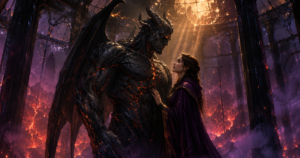
Monster romance can easily become all monster and not enough romance. The creature design, mythic curse, frightening reputation, forbidden forest, old castle, or strange body language can be so interesting that the love story quietly slips into the background.
That is a shame, because the romance is what makes the monster matter. Readers may arrive for the horns, shadows, claws, wings, ancient magic, or lonely beast in the ruined tower, but they stay because two characters begin to understand each other in a way no one else does.
Keep the Emotional Arc at the Center
A monster romance still needs a clear emotional path. The hero can be strange, frightening, cursed, or misunderstood, but the story should still track how trust grows between him and the heroine.
The creature elements should make that emotional path sharper, not replace it. If the monster concept is interesting but the couple has no real movement, the story can feel like a beautiful painting with no heartbeat.
Ask What Changes Between Them
Before you build the monster’s lair, powers, history, and mythic rules, ask one simple question: what changes between the hero and heroine?
Maybe she starts out afraid of him and ends up trusting him. Maybe he begins as a lonely creature who believes he is unlovable, then slowly learns to accept care. Maybe they both begin guarded, for different reasons, and the romance becomes the place where each of them can finally lower a wall.
That change is the spine of the romance.
A monster hero can be fascinating from the first page, but fascination is not the same as a relationship. The reader needs to feel a shift. The first time she sees him, she may step back. Later, she may step closer. That movement matters more than another paragraph describing how tall he is.
Make Every Strange Detail Serve Feeling
Monster details are wonderful. I am certainly not here to remove the glowing eyes or mysterious scars. But every major strange detail should do some emotional work.
If he has claws, use them to show restraint. If he has wings, use them to show vulnerability, pride, or fear of confinement. If he has a monstrous voice, let the heroine learn the difference between his warning growl and his quiet attempt at comfort.
The detail becomes romantic when it changes meaning.
At first, his shadow across the doorway may frighten her. Later, that same shadow may mean he has come back, and she is no longer alone. The physical trait stays the same, but the emotion attached to it changes. That is the kind of craft that keeps the romance alive.
Let the Heroine React Like a Real Person
One of the quickest ways to lose the romance is to make the heroine accept everything too easily. If the monster hero is genuinely strange or feared, her reactions should have texture.
She can be brave without being careless. She can be curious without ignoring danger. She can be drawn to him while still needing time to understand what he is.
Fear Can Be Honest Without Being Cruel
A heroine’s first fear does not make her shallow. It makes her human.
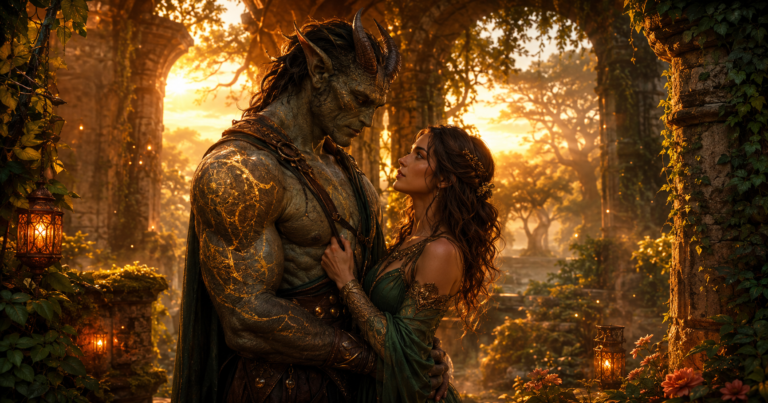
If a huge horned figure steps out of the mist, or a cursed guardian watches her from the edge of a ruined chapel, she does not need to immediately think about how romantic he looks. She may freeze. She may back away. She may clutch a lantern, ask him not to come closer, or wonder whether the stories were true after all.
That honesty helps the romance.
Because later, when she chooses to stay, the choice means something. She has seen the frightening outline and did not pretend it was nothing. She has simply learned there is more beneath it.
Curiosity Is a Strong Bridge to Trust
Curiosity is one of the best tools in monster romance. It gives the heroine a reason to move closer before she fully trusts the hero.
She notices that the monster leaves food outside the village gate but never takes credit for it. She sees him turn away when children stare, as if their fear hurts more than their stones. She wonders why he never steps past the old boundary stones, or why he keeps a locked room full of broken musical instruments.
Curiosity creates emotional movement.
It lets the heroine discover him gradually. She does not wake up one morning and magically decide he is safe. She gathers evidence. She watches. She asks questions. She notices kindness where everyone else has only seen danger.
Give the Monster Hero More Than a Curse
Curses, transformations, ancient punishments, and dark legends can give a monster hero a strong starting point. But he cannot only be his curse.
The reader needs a person inside the myth. He may not be human, and he should not feel too human if the story promises a creature hero, but he still needs desires, habits, fears, and choices.
Build His Inner Life
What does he do when no one is watching? That question can reveal more than a dramatic backstory.
Maybe he tends a strange night garden because flowers are the only living things that do not fear him. Maybe he repairs old statues in a ruined temple because they are all that remain of his people. Maybe he carves tiny animals from wood, but hides them because his hands look too rough for such delicate work.
These private details make him feel alive.
They also give the heroine something to discover beyond the obvious monster traits. She sees the frightening exterior, then the quiet routine. The contrast is not just “he looks scary, but he is nice.” It becomes more specific and more human in the emotional sense, even if he is not human at all.
Let Him Want Something Before He Wants Her
A monster hero who has no life before the heroine can feel thin. Give him a desire, duty, or burden that exists before the romance begins.
He may want to protect a hidden village, break an old family curse, guard a dangerous relic, keep humans away from a haunted forest, or simply be left alone. He may believe wanting anything more would be foolish.
Then the heroine arrives and complicates that desire.
This is useful because love should not float in empty space. If loving her costs him something, changes his duty, or forces him to face a fear, the romance gains weight. He is not just drawn to her because the plot says so. His whole life has to adjust around the feeling.
Write Romantic Tension, Not Just Creature Tension
Monster romance naturally creates tension through difference. The hero is strange. The heroine is human. The world may fear him. The setting may be dangerous.
That is useful, but romantic tension needs more than atmosphere. It needs emotional pressure between the characters themselves.
Use Nearness With Restraint
A monster hero’s physical presence can create strong tension without becoming too much for an AdSense-friendly blog or a gentle romance-writing guide. You can focus on closeness, awareness, and restraint.
He stands near enough that she feels the warmth coming from him, but he does not touch her without permission. He reaches out, then stops when he sees uncertainty in her face. He lowers his head so she does not have to crane her neck to meet his eyes.
Those moments can be deeply romantic.
The tension comes from what is almost said, almost done, almost understood. A hand pauses. A breath catches. A frightening creature chooses patience. That can do more for the romance than any dramatic declaration.
Let Conversation Carry Some of the Spark
Monster romance does not have to rely only on intense staring and moonlit silhouettes. Dialogue can carry warmth, humor, uncertainty, and longing.
The heroine might ask blunt questions because she is tired of being afraid. The hero might answer too literally because he does not understand human teasing. She might say, “Do you always lurk in doorways?” and he might quietly reply, “Only when I am trying not to frighten you by entering.”
That kind of exchange does several things at once.
It shows his effort. It shows her courage. It gives the reader a small smile. And it lets the romance develop through personality, not just visual contrast.
Protect the Romance From Too Much Plot Noise
Monster romance often comes with big story ingredients: curses, hunters, ancient gods, cruel villagers, secret bloodlines, forbidden forests, ruined castles, prophecy, transformation, and hidden worlds.
Those elements can be beautiful. But if every chapter is packed with lore and danger, the couple may not have room to breathe.
Give the Couple Quiet Pages
Quiet scenes are not filler. In monster romance, they are often where the love story becomes believable.
Let the heroine sit by the fire while the monster hero repairs a broken hinge with hands everyone else fears. Let them share a meal, even if his food is strange and hers is too plain for his taste. Let them walk through a moonlit garden where neither of them knows what to say at first.
These scenes give readers time to feel the shift.
A loud plot can show what the characters survive. A quiet scene shows why survival matters. Without those pauses, the romance can feel rushed, even if the book has plenty of events.
Use External Conflict to Test the Bond
External conflict should not only create danger. It should test what the couple has built.
If villagers arrive with torches, does the heroine stand with him or hesitate? If the monster’s curse worsens, does he push her away out of fear? If an old enemy offers him freedom at the cost of forgetting her, what does he choose?
These questions turn plot into romance.
The danger outside the couple should reveal something inside the couple. Trust. Fear. Loyalty. Doubt. Devotion. If the conflict does not change what they understand about each other, it may be exciting, but it will not strengthen the love story.
Keep the Tone Respectful and Emotionally Safe
Monster romance can hold fear, wonder, loneliness, danger, and tenderness all at once. That mix is part of the appeal.
Still, the romance needs a sense of emotional safety. Readers can enjoy a dangerous hero while still wanting to believe he will honor the heroine’s choices, dignity, and trust.
Let Boundaries Matter
The more powerful the monster hero is, the more important boundaries become. His respect for the heroine’s limits can be one of the most romantic things about him.
If she asks him not to come closer, he stops. If she wants the truth, he does not hide behind mystery forever. If she needs time, he gives it, even when waiting hurts him.
That restraint tells the reader what kind of hero he is.
A monster hero does not become attractive because he can overpower the world. He becomes attractive because he could, but chooses care where the heroine is concerned. That is a very different kind of strength.
Make Trust Visible on the Page
Trust should not be assumed. Show it changing through action.
At first, she may keep a locked door between them. Later, she may leave it open. At first, he may stay several steps away so he does not frighten her. Later, she may be the one who closes the distance. At first, she may call him by the name everyone else uses. Later, she may learn his true name and use it gently.
These visible shifts make the romance feel earned.
Readers love seeing the emotional distance narrow. That is the real transformation in many monster romances. Not the curse breaking, not the beast becoming handsome, not the village finally approving. The real transformation is that two people who had every reason to remain apart learn how to stand beside each other.
Final Thoughts
Monster romance does not lose the romance because the hero is too strange. It loses the romance when the emotional connection becomes less important than the creature concept.
Let the monster remain a monster. Let him have the horns, wings, claws, shadows, glowing eyes, old curse, strange customs, or frightening reputation. Those details give the story its shape.
But keep returning to the couple. What does she learn about him? What does he risk for her? Where does fear soften into trust? Where does curiosity become care? Where does the frightening figure become someone she would choose, even when the world tells her not to?
That is the heart of it. Monster romance works when the strange parts make the love story deeper, not when they crowd it out.