
Table of Contents
ToggleIntroduction
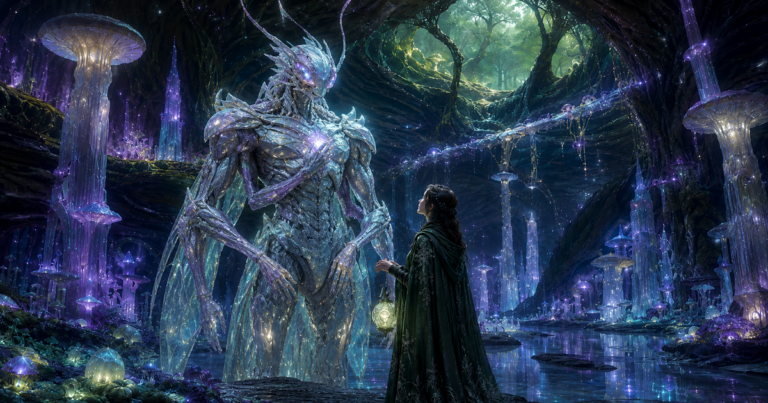
A monster hero who feels truly non-human can make a romance unforgettable. He should not feel like an ordinary man with horns added for flavor. He should move, think, react, love, fear, and protect in ways that remind the reader he belongs to another kind of life.
That does not mean making him impossible to understand. The best monster heroes are strange and emotionally readable at the same time. The reader should feel the difference between him and a human hero, but still understand why the heroine begins to trust him, care for him, and eventually choose him.
Start With a Different Way of Existing
A truly non-human monster hero should not only look different. His body, instincts, senses, and daily habits should affect the way he exists in every scene.
This is where a lot of monster romance becomes more interesting. The hero’s strangeness is not decoration. It shapes his relationship with the heroine, the world, and himself.
Let His Body Change the Scene
If your hero has wings, horns, claws, scales, bark skin, stone hands, a tail, antlers, fins, or too many eyes for human comfort, those traits should influence how scenes unfold. A winged hero may hate narrow rooms. A horned hero may turn sideways through doorways. A creature with glowing markings may avoid emotional conversations in the dark because his body gives away too much.
These details make him feel present.
They also create opportunities for romance. Maybe the heroine notices that he folds his wings close when he stands near her, not because he is ashamed, but because he is trying not to crowd her. Maybe he keeps his claws curled inward until she gently asks if that hurts. Maybe he ducks under a beam in her cottage, and for the first time she understands how uncomfortable human spaces are for him.
That is stronger than simply telling us he is not human. The scene proves it.
Give Him Different Senses
A non-human hero may not experience the world through human senses. That can be a wonderful way to make him feel strange without making him cold.
Maybe he recognizes emotion through scent. Maybe he hears stone settling in the walls. Maybe he sees heat instead of color, senses lies as pressure in the air, or understands storms before clouds gather. Maybe human speech is not his first way of reading meaning at all.
This can make ordinary romantic moments feel fresh.
The heroine thinks she has hidden her fear, but he knows the room tastes of lightning whenever she is afraid. She assumes he is ignoring her, but he is listening to the rhythm of her steps from three rooms away. She offers a flower, and he reacts not to its color, but to the warmth of the hand that carried it.
Small sensory differences help the reader feel that his world is not quite hers.
Build His Mind Around Non-Human Priorities
A monster hero should not always value the same things humans value. He may still care about loyalty, safety, love, and belonging, but the path he takes toward those feelings can be unusual.
This is where you can make him deeply romantic without making him too human. Let his inner logic be strange, but consistent.
Give Him Priorities That Feel Alien to Humans
Maybe he does not understand human embarrassment, but he treats spoken promises as sacred. Maybe he has no interest in wealth, but considers a shared name more precious than gold. Maybe he does not fear death in the human way, but fears being forgotten by the forest, the mountain, or the hidden world that made him.
These priorities create tension.
The heroine may think he is cold because he does not comfort her in a familiar way. Then she learns that among his kind, sitting in silence beside someone is the deepest form of care. She may think he is refusing to answer her, when in truth his people only speak certain truths after trust has been proven through action.
The hero becomes more believable when his choices come from a world view, not from random moodiness.
Let Him Misunderstand Human Customs
A non-human monster hero will probably misread human behavior. That is not a flaw in the story. It is useful.
He may not understand why humans say the opposite of what they mean to be polite. He may mistake nervous laughter for mockery. He may think food offered by hand is a vow, or that entering a home means accepting responsibility for everyone under its roof. He may find it strange that humans apologize with words instead of repairing what they damaged.
These misunderstandings can create humor, tenderness, and conflict.
The key is to make them matter emotionally. If he gets a custom wrong, what does it reveal? His sincerity? His fear of being rejected? His effort to learn? His frustration with a species that hides so much behind soft phrases and careful smiles?
That kind of awkwardness can make him more endearing without making him less strange.
Use Mythic Lore to Shape His Identity
Mythic lore can help a monster hero feel larger than one individual character. He may belong to an old species, a hidden court, a cursed bloodline, a forest law, a river kingdom, or a forgotten world beneath the mountains.
The important thing is to connect the lore to his behavior. Lore should not sit in the background like pretty wallpaper. It should explain why he acts the way he does and why loving the heroine changes his life.
Give His Kind Rules and Rituals
A non-human hero feels richer when his kind has customs that affect the romance. These customs can be beautiful, strange, difficult, or misunderstood.
Maybe his people never speak a beloved’s name where enemies might hear it. Maybe they give stones instead of flowers because stone remembers touch. Maybe they do not say goodbye, because departure is considered a wound that should not be named. Maybe they court by guarding a doorway, sharing warmth, or teaching someone the hidden path home.
These details make his love feel different.
They also give the heroine something to learn. She may think he is being distant until she realizes he has been offering devotion in the only language he knows. The romance deepens when she begins to understand his gestures, not just translate them into human terms.
Let Lore Create Emotional Cost
Mythic lore should also create pressure. If his world has rules, those rules should affect the couple.
Maybe a guardian cannot leave the boundary he protects. Maybe his true form can only be seen by someone who has chosen him freely. Maybe the hidden world will not accept a human unless the hero risks his place among his own kind. Maybe his people believe love makes a guardian vulnerable, and vulnerability is punished.
This gives the romance weight.
The monster hero is not simply different. He is bound to a world with history, duty, and consequence. When he moves toward the heroine, he is not only risking rejection. He may be risking law, identity, exile, or the trust of his own kind.
Readers feel the romance more strongly when love has a cost.
Make His Emotional Expression Unfamiliar But Clear
A truly non-human hero may not express emotion in ordinary human ways. He may not smile often. He may not say the expected words. He may not even understand why the heroine needs certain kinds of reassurance at first.
Still, the reader needs to understand his feelings. The trick is to give him a different emotional language and teach the reader how to read it.
Create a Private Emotional Language
A non-human hero can express care through repeated gestures. Once the reader learns what a gesture means, it becomes emotionally powerful.
Maybe he turns his palms upward to show trust. Maybe his markings glow when he is worried. Maybe he leaves one lantern burning when he wants her to know he is nearby. Maybe he lowers his head only to those he respects. Maybe he speaks less when moved because, among his kind, important feelings are held quietly.
This gives the couple a private language.
Early in the story, the heroine may not understand it. Later, she does. That change is beautiful because it shows intimacy. She has learned him well enough to notice what others miss.
Use Silence With Purpose
Monster heroes are often silent, but silence should not be empty. If he says very little, the scene needs to show what the silence means.
Is he guarding himself? Is he listening? Is he respecting her anger? Is he frightened that his voice will make things worse? Is he translating his thoughts from an older, stranger way of thinking into words she can understand?
Give silence intention.
A hero who says nothing because the author wants him mysterious can become frustrating. A hero who says nothing because speech is difficult, sacred, dangerous, or emotionally revealing becomes much more interesting. His silence becomes part of his character, not a gap in the writing.
Let the Heroine Learn Him Slowly
The heroine is often the bridge between the non-human hero and the reader. She does not need to understand him instantly. In fact, the romance usually feels stronger if she does not.
Let her misread him at first. Let her learn. Let her ask questions, make mistakes, notice patterns, and slowly become fluent in his strange way of being.
Start With Misinterpretation
Misinterpretation is useful because it gives the relationship somewhere to go. The heroine may think the hero is angry when he is frightened. She may think he is cold when he is showing respect. She may think he is rejecting her when he is actually trying not to claim too much too soon.
These mistakes should not make her look foolish. They should make the difference between them feel real.
A human woman will read him through human habits at first. That is natural. Then, scene by scene, she begins to understand his meaning. The same gesture that once confused her later brings comfort because she knows what it costs him.
That is emotional progress.
Give Her Moments of Translation
Eventually, the heroine should begin to translate him better than anyone else. This can be a deeply romantic payoff.
Someone else sees the monster step back and thinks he is retreating. She knows he is giving her room to choose. Someone hears his silence and thinks he does not care. She knows he is afraid that any word will reveal too much. Someone sees his claws curl and thinks he is angry. She knows he is trying to hold himself still.
These moments show intimacy without needing a speech.
The heroine’s understanding proves that the romance has depth. She has not forced him to become human for her comfort. She has learned the shape of his difference and found the heart inside it.
Keep the Romance Emotionally Safe
A non-human monster hero can be strange, intense, powerful, and physically intimidating, but the romance should still feel respectful. The heroine’s choices, comfort, and voice must remain clear.
This is especially important when the hero’s instincts or customs differ from human expectations. Difference can create tension, but it should not erase consent, trust, or emotional safety.
Make His Restraint Meaningful
The more powerful and non-human the hero is, the more romantic his restraint becomes. He may not instinctively understand every human boundary, but he should care enough to learn them.
If she steps back, he notices. If she asks for truth, he tries to give it in a way she can understand. If his customs would bind her to something serious, he explains before asking anything of her.
That restraint matters.
It shows that he is not simply following instinct. He is choosing care. A non-human hero becomes easier to root for when he uses his strength to create safety rather than pressure.
Let Difference Become Connection
The goal is not to remove the difference between them. The goal is to let the difference become part of the bond.
She teaches him why humans say goodnight even when they will see each other in the morning. He teaches her why his people never turn their backs on the stars after a promise. She teaches him that a locked door can feel frightening. He teaches her that a shared silence can be a gift.
Little by little, they build a relationship that belongs to them.
That is the heart of non-human monster romance. Not making him human. Not making her abandon humanity. Letting both remain themselves while creating a shared language between them.
Final Thoughts
A monster hero feels truly non-human when his difference reaches deeper than appearance. His body shapes the scene. His senses change what he notices. His customs guide his choices. His emotional language asks the heroine, and the reader, to pay attention.
But he still needs an emotional center.
Make him strange, not empty. Make him difficult to read at first, not impossible to care about. Give him instincts, rituals, boundaries, duties, and ways of loving that do not feel borrowed from an ordinary human hero.
Then let the heroine learn him. Let her stop translating him into human terms and start understanding him on his own. That is where the romance becomes tender. She does not love him because he becomes familiar. She loves him because his unfamiliarity becomes meaningful.